




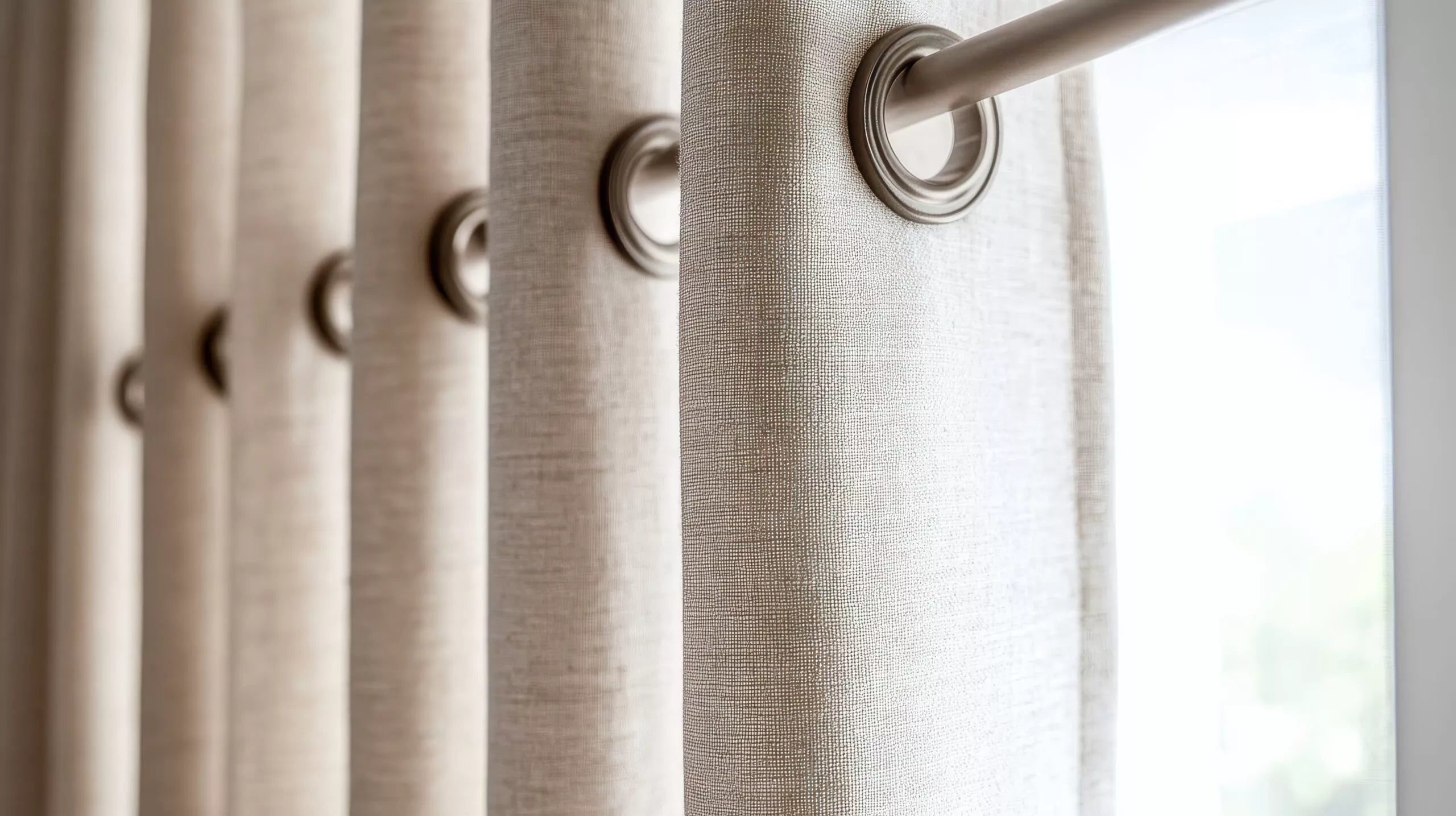
Combining curtain rods and sliding door hardware
curtain rods and doorhardware might sound like an “unusual” mix, but in smart interiors, it is actually a logical step. Especially in small apartments, tiny houses, and multifunctional spaces, you want to be able to close off the space flexibly without extra turning circles. A sliding door provides structure, while a curtain adds atmosphere, softness, and extra privacy. Together, you create a space that you can adapt at any moment.
If you handle it right, you create a sense of calm: a consistent style of materials, a unified rhythm in your home, and fewer clashing solutions. In this blog, you will learn how to combine curtain rods and sliding door hardware in a way that actually works: practical, sturdy, and beautiful.
What exactly are curtain rods and sliding door hardware?
Curtain rods are rods or rails from which you hang curtains, on the wall or ceiling. They are available in steel, stainless steel, brass, wood, and often in matte or coated finishes. In this case, not only the look but also the load capacity determines which system is suitable (especially for heavy curtains).
Sliding door hardware is the system by which a door slides horizontally: rail, carriages/rollers, fixings, and often soft-close or guides. You have visible rails (rugged/industrial) and more subtle systems (calm/minimalist).
Why this is interesting: combining curtain rods and sliding door hardware can be done in several ways. You can place a curtain in front of a sliding door for extra privacy or acoustics, or you can use a curtain as a “lightweight door” on a rail. It all comes down to distances, overlap, and installation.
Space-saving at home: how curtain rods and sliding door hardware complement each other
A hinged door requires space to swing open. In a small home, this often means less walking space, less room for furniture, and sometimes even doors bumping into each other. A sliding door solves this by sliding along the wall. If you add a curtain, you gain extra flexibility without adding extra bulk. Practical examples that often work well:
- Sleeping nook: sliding door for structure + curtain for blackout and softer acoustics
- Walk-in closet: curtain on rail as a “door” + sliding door as extra closure for clutter
- Home office: open during the day, closed in the evening with a curtain for peace and quiet.
Combining curtain rods and sliding door hardware therefore gives you a double “closure”: hard (door) and soft (textile). This often feels surprisingly luxurious, even in a small house.
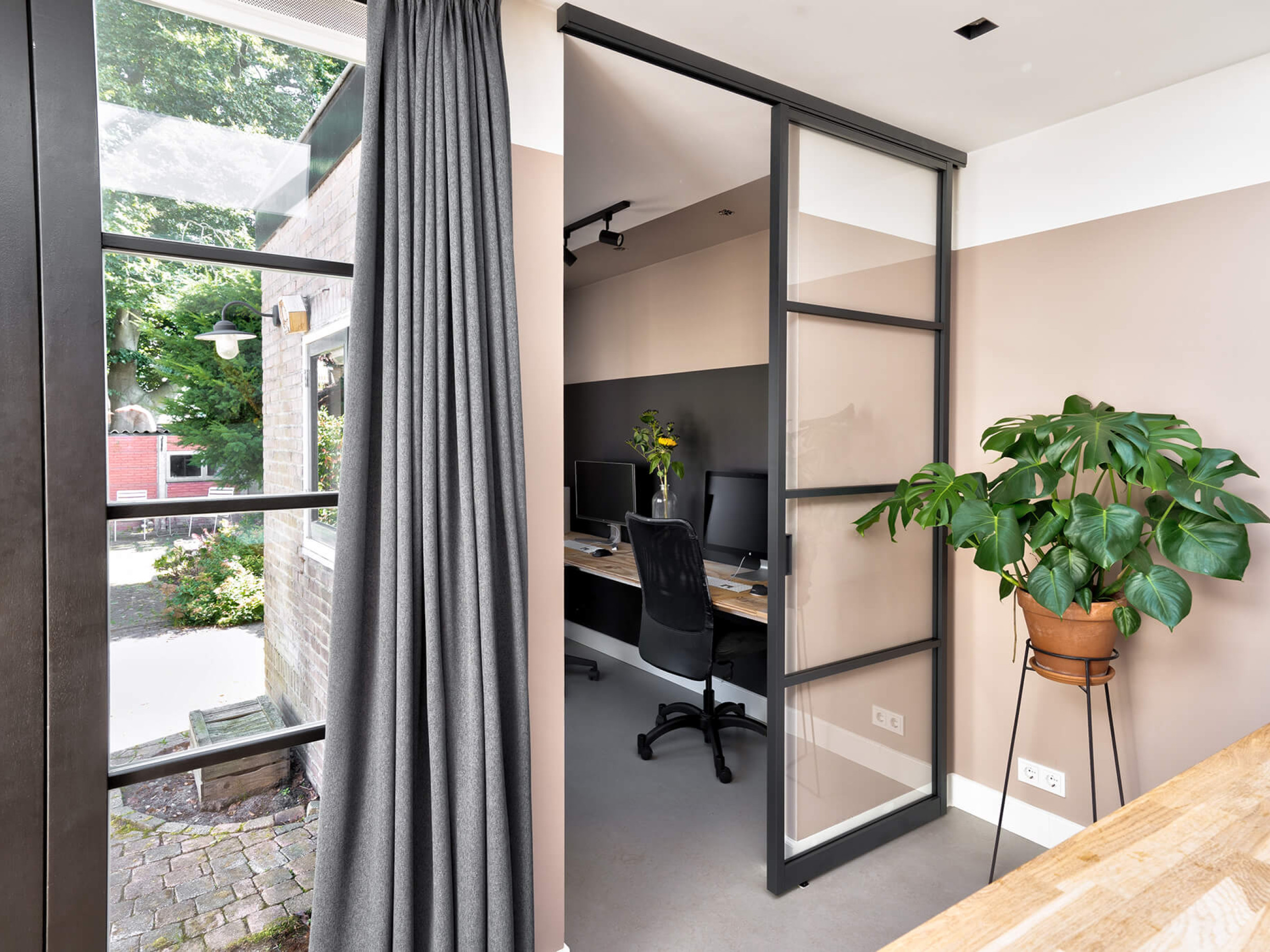
Combine styles: industrial, country, modern, or classic?
This is where the combination really gets interesting. Combining curtain rods and sliding door hardware is an opportunity to extend your interior style right down to the technical details.
Industrial
Black metal rod + visible black rail + wooden sliding door. Add a linen curtain to soften the overall look.
Hotel chic / warm luxury.
Brass details + rich curtain fabric (e.g. velvet-look) + a solid sliding door. Deliberately choose a single metallic tone here to keep the overall look calm.
Scandi/minimalist
White or subtle rail + light curtains + sleek handles. Let the technical components blend into the interior.
The key to combining curtain rods and sliding door hardware is consistency: ensure the rod, rail, handles, and any rosettes share the same color tone or finish.
Technical considerations during assembly
This is where things often go wrong, so this is an important chapter.
1) Weight and load capacity
A sliding door can be heavy. The rail and fixings must be able to handle this, and the same applies to a curtain rod if you choose thick or long curtains. Always use mounting hardware that matches your wall type (concrete, brick, plaster).
2) Distance between curtain and door
You don't want the curtain and door to touch. Usually, this works well:
-
curtain closest to the room (front)
-
Sliding door behind it, with sufficient clearance.
Or the other way around if you want a “soft wall” behind the sliding panel. But then you need to pay extra attention to the door's path.
3) Determine overlap wisely.
A small overlap provides extra privacy and sound dampening. Too much overlap causes folds to snag or chafe.
4) Level and square
. When combining curtain rods and sliding door hardware, installing them crookedly is disastrous. A sliding door that does not run straight immediately feels cheap and will wear out faster.
Which combinations work best in practice?
These are combinations you see recurring in many homes, because they are simple and effective:
- Sliding door + blackout curtain (bedroom, guest room, studio)
- Sliding door + semi-transparent curtain (living room, office: privacy without darkness)
- Curtain as a wardrobe door on a rail + sliding door as an extra divider (to hide clutter)
- Curtain behind sliding door (soften wall, improve acoustics)
Combining curtain rods and sliding door hardware works particularly well if you decide in advance what the main function is: privacy, sound, light, or pure style. Then the choice of fabric and installation becomes much easier.
Do it yourself or outsource?
Self-assembly is perfectly fine if:
- the door is not extremely heavy
- your wall type is clear (and you have the right plugs)
- you can measure accurately and work with a spirit level
Outsourcing is smart if:
- if it concerns a heavy door or a long rail
- your walls are vulnerable (e.g. plaster)
- you want a sleek end result without the risk of misalignment
A hybrid approach also works: measuring and preparing yourself, with installation by a professional. If in doubt, you can ask Deurbeslag Expert for advice, especially if you also want to choose the right sliding door hardware right away.
Common mistakes when combining curtain rods and sliding door hardware
These are the mistakes you see most often:
- curtain too close to the sliding door, causing it to rub
- not taking full sliding stroke into account (door hits or stops too early)
- rod/rail too light, causing sagging
- incorrect plugs in plaster or hollow walls
- aesthetic mismatch (e.g. ultra-modern stainless steel with very rustic fittings without a bridge)
- installation without a measurement plan, causing everything to turn out “almost” wrong
If you want to combine curtain rods and sliding door hardware without frustration: measure first, then order.
When do you choose a visible or invisible solution?
Visible suits interiors with character: industrial, country, loft. The hardware deserves to be seen and makes a style statement.
Invisible suits tranquility: minimalist, modern, Scandinavian. Here, you want technology to fall away so that the space looks larger and cleaner.
You can also mix and match: a visible sliding door rail as a statement, but a subtle ceiling rail for the curtain. That works surprisingly well if you match the colors/finishes.
Improve light, acoustics, and privacy by combining them smartly
This is the hidden benefit of combining curtain rods and sliding door hardware. Curtains do much more than “dress up”. With the right fabric, you can:
- filter or dim bright light
- reduce reverberation (especially on hard floors)
- create privacy without building walls
In open living spaces or workspaces, that is invaluable. Heavier fabrics dampen sound better, while lighter fabrics keep it airy. By combining a curtain and a sliding door, you can choose at any moment: open, semi-open, or closed.
Do you want to know everything about door hardware? Dive into our extensive online knowledge base, where you will find everything you need to know about door hardware and security.
Combining curtain rods and sliding door hardware in DIY projects
If you are going to get started yourself, first make a mini-plan:
- determine function (privacy/light/sound/space)
- choose door + curtain fabric
- determine mounting: ceiling or wall, and sequence of systems
- measure overlap and clearance
- mount level, test, adjust
A tip that saves a lot of hassle: temporarily hang a curtain (with tape or a temporary support) to see if the height and overlap feel right. Only then install it permanently.
Our range includes everything you need to perfectly finish your doors and windows, such as door handles , doorknobs , door levers , rosettes , hinges, locks and fittings , window hardware, interior door hardware , exterior door hardware , furniture hardware , and sliding door hardware .
Inspiration: combining the most beautiful examples of curtain rods and sliding door hardware
You see this combination increasingly often in:
- lofts with black rail and linen curtain
- Hotel chic bedrooms with sliding door + blackout curtain
- tiny houses where one rail closes off multiple zones
- workstations where curtain and sliding panel can switch flexibly
If you do it right, it doesn't feel like “two systems”, but like one smart, calm solution.
Want to buy top-quality door hardware?
Combining curtain rods and sliding door hardware is a smart way to gain space, create a calmer interior, and simultaneously improve privacy, light control, and acoustics. It works just as well in small homes as in large spaces, as long as you measure carefully and choose the right materials.
You will find secure door hardware at Deurbeslag Expert. Our extensive range offers countless possibilities in various designs and finishes. Each product is crafted with care from high-quality materials, so you can count on a sophisticated look and a long lifespan.
Our experienced specialists are ready to guide you in making the best choice. Thanks to our expert advice, you will effortlessly find door hardware that is not only stylish but also functional. Would you like to see our products in person first? In our showroom, you can admire all styles and finishes and gain inspiration for your project.
For more information or personal advice, you can always contact us. Our friendly team will be happy to help you choose the ideal door hardware to give your home a stylish upgrade.
Frequently Asked Questions
Why combine curtain rods with sliding door hardware?
You get a double closure: hard (the door) and soft (textile). The sliding door provides structure and saves space, while the curtain adds atmosphere, privacy, and better acoustics. Ideal for small apartments, tiny houses, and multi-purpose spaces.
How much distance do you keep between the curtain and the door?
Enough clearance so they do not touch: usually the curtain at the front (facing the room) and the sliding door behind it. A small overlap provides extra privacy and sound dampening, but too much overlap causes pleats to get jammed.
What should you pay attention to during assembly?
Pay attention to weight and load capacity (the rail and mounting must be able to support a heavy door or thick curtain), use the correct mounting hardware for your wall type (concrete, brick, plaster), and mount level. Mounting at an angle feels cheap and wears out faster.
How do you keep the combination stylish?
With consistency: ensure the rod, rail, handles, and any rosettes share the same color tone or finish. For example, black metal for an industrial style, brass for warm luxury, or a white or subtle rail for a Scandinavian minimalist look.
What are common mistakes?
The curtain too close to the door (it will rub), not taking the full sliding stroke into account, a rod or rail that is too light (it will sag), using the wrong plugs in plasterboard or hollow walls, and installing without a measuring plan. Measure first, then order.


